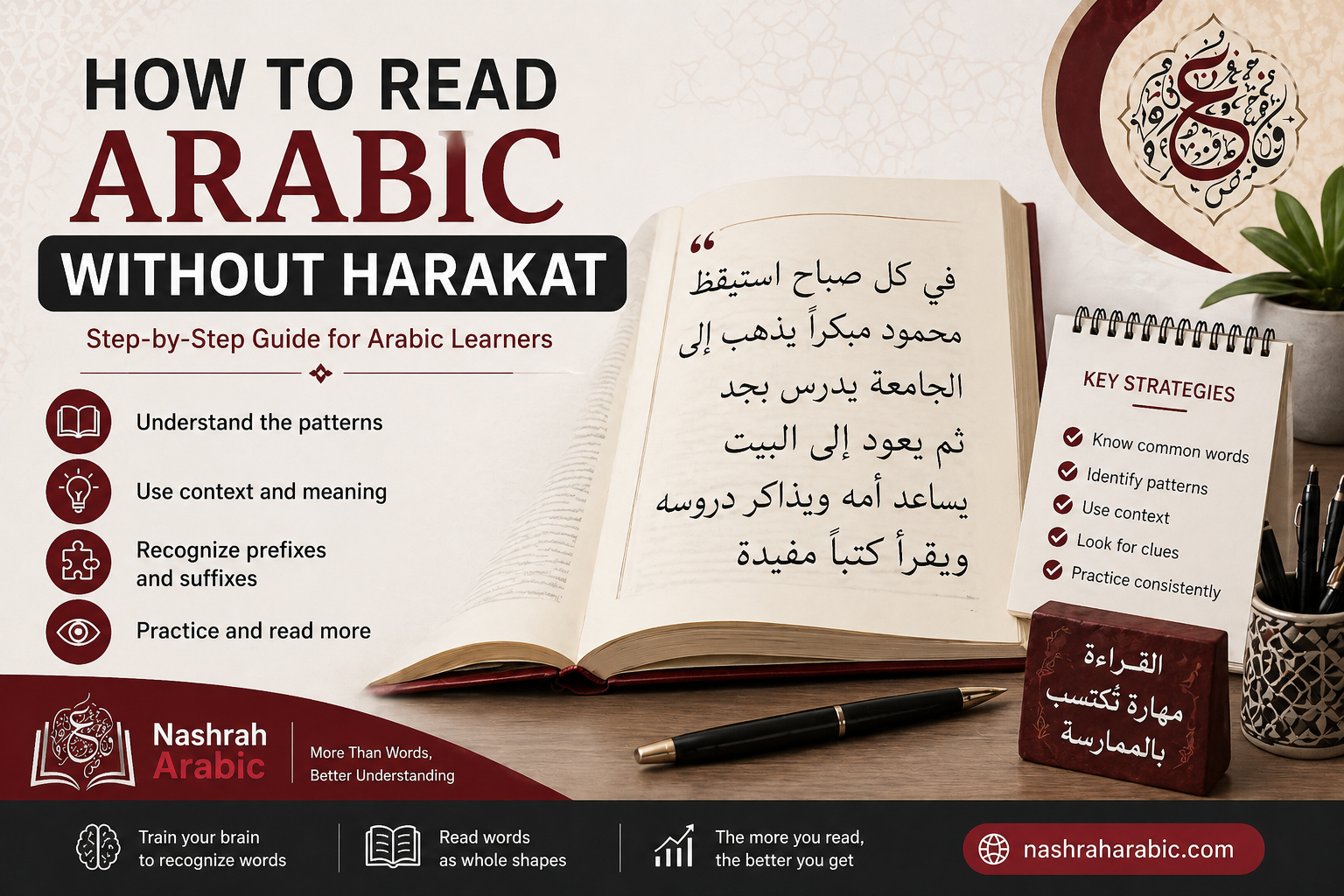
One of the biggest challenges for Arabic learners is reading Arabic texts without harakat (vowel marks).
In real life, books, articles, and signs are written without harakat.
So how do native speakers read correctly?
They do not guess.
They follow patterns.
This guide will show you how.
1) Start With What You Already Know
When you see a familiar word, your brain recognizes it instantly.
Example:
كتاب — you already know it is kitāb.
Vocabulary knowledge makes reading easier.
2) Use Word Patterns (أوزان)
Arabic words follow patterns.
Example pattern: مَفْعَل
مكتب → maktab (place of writing)
When you know patterns, you can predict vowels.
3) Look at the Sentence Meaning
Context tells you how to read the word.
كتب الطالب الدرس
You know:
كتب = kataba (the student wrote)
Because of the sentence structure.
4) Recognize Common Prefixes and Suffixes
Prefixes like:
- مـ
- تـ
- يـ
Suffixes like:
- ون
- ات
- ه
They guide pronunciation.
5) Learn Common Verb Forms
When you see:
يكتب → yaktubu
مكتوب → maktūb
Forms help you read correctly.
6) Practice With Simple Texts First
Children’s stories and simple articles are perfect practice.
7) Do Not Try to Read Letter by Letter
Native speakers read words as whole shapes.
Train your eyes to see the word, not the letters.
Final Tip
The more you read, the easier it becomes.
Reading without harakat is a skill built with practice, not memorization.
Learn more Arabic reading skills
Visit: https://nashraharabic.com